Birthday Boy Design Review for Business Use
As an experienced embroidery designer who has spent years refining digital assets for commercial applications, I approach every new file with a critical eye toward scalability and brand impact. Today, I am reviewing the Birthday Boy machine embroidery design. While the product description invites you to embellish fabrics like towels and pillows with a touch of whimsy and charm, my focus is on how this design performs when deployed as a strategic asset for small business merchandise, branded patches, and custom apparel. For Etsy sellers, boutique owners, and merch creators, the difference between a decorative stitch and a professional brand element often comes down to execution details.
First Impressions: Whimsy Meets Commercial Viability
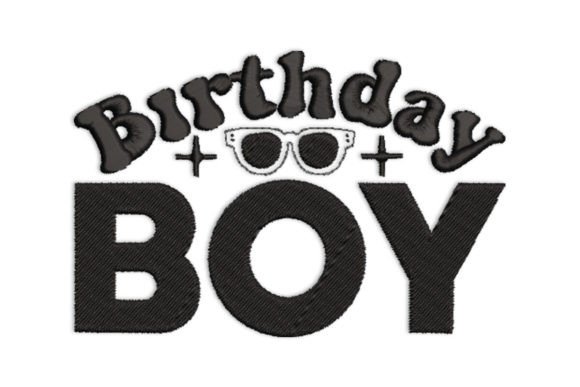
The title Birthday Boy immediately suggests a playful, celebratory tone. When paired with the description promising "whimsy and charm," the first impression is one of approachability rather than rigid corporate formality. In the world of brand identity, this design leans heavily into the friendly and handmade aesthetic. It feels suitable for creative studios, bakeries, florists, and pet brands that want to convey warmth and personal connection.
However, for a business looking to scale, "whimsy" must not compromise legibility. A design that looks charming on a pillow may fail miserably on a high-volume tote bag or a curved cap front if the stitch density and outline thickness are not optimized. The potential here lies in its ability to soften a brand's image, making it feel more accessible to customers who value artisanal quality over mass-produced uniformity.
Real-World Applications for Small Business Merch
In a real-world scenario, imagine a local café or a handmade shop launching a birthday-themed promotional week. They need to create a cohesive look across various touchpoints. Here is how the Birthday Boy design could function as a versatile component of their small business merch strategy:
- Branded Patches: This design excels as an embroidered patch for denim jackets, aprons, or backpacks. It serves as a perfect accent piece for staff uniforms, signaling a special event or a team member's birthday celebration without needing a full chest logo.
- Tote Bag Design: For crafters selling at markets, placing this motif on a canvas tote bag creates an instant gift-ready item. It adds a personalized touch that encourages social sharing and organic marketing.
- Apron Embroidery: In a bakery or floral studio, stitching this on the bib of an apron humanizes the service provider. It transforms a functional garment into a conversation starter, enhancing customer engagement.
- Cap Embroidery: As a sleeve detail or a smaller chest accent on a baseball cap, the design can add a pop of personality to work shirts. However, this requires careful consideration of the curvature of the hat.
- Product Packaging Accents: For handmade product lines, using this as a label sewn onto the packaging tag can elevate the unboxing experience, reinforcing the handmade product narrative.
Critical Considerations for Professional Execution
While the concept is sound, the devil is in the details. Not every embroidery file is ready for immediate commercial production. There are specific areas where Birthday Boy requires caution to ensure the finished product maintains a premium feel.
Size and Legibility
If you intend to use this design as a small patch or a tiny logo on a pen or keychain, you must evaluate the lettering size. Tiny text in machine embroidery often loses definition due to thread bulk. If the design relies on fine outlines or intricate details, shrinking it too much will result in a muddy, undefined blob rather than a crisp logo. Always test the design at your intended final size before committing to a bulk run.
Fabric Texture and Surface Curvature
The performance of the design varies significantly based on the substrate. On flat, stable fabrics like cotton twill for tote bags, the design should hold well. However, applying this to textured fabrics or highly curved surfaces like the front of a fitted cap can cause distortion. The hoop size and the stability of the fabric during stitching are crucial. If the design includes dense fill stitches, they may pucker on thin materials or struggle to lay flat on thick denim.
Thread Color Contrast
To maintain professionalism, the thread colors must offer sufficient contrast against the background fabric. A light-colored whimsical design on a dark uniform might require a heavy underlay or a contrasting outline to prevent the threads from disappearing into the fabric texture. Conversely, dark threads on white fabric must be checked for coverage; insufficient density can make the design look cheap and unfinished.
Impact on Brand Identity and Trust
Every stitch tells a story about your business. Using a design like Birthday Boy signals that you care about the customer's personal milestones. It fosters a sense of community and trust. When a client receives a gift or sees a staff member wearing a shirt with a charming, well-executed design, it reinforces the perception of a thoughtful, detail-oriented brand.
Conversely, poor execution can erode professionalism. If the embroidered patch has loose threads, uneven spacing, or a misaligned font, it reflects poorly on the entire company. Visual consistency is key to building a recognizable brand. Ensure that the style of Birthday Boy aligns with your other design assets so that your branding remains cohesive across all platforms, from your website to your physical products.
Essential Designer Notes for Production
Before you upload this digital embroidery file to your machine for a commercial project, follow these practical steps to guarantee success:
- Test in Black and White: Convert the design to a monochrome view to check the balance of fill stitches versus satin stitches. This helps identify areas that might be too dense or too sparse.
- Verify Hoop Size: Confirm the recommended hoop size for the design. If the design exceeds the standard 4x4 or 5x7 hoops, you will need to plan for multi-hoop sequences, which increases the risk of registration errors.
- Stabilizer Selection: Choose the correct stabilizer for your fabric type. A lightweight cut-away is often necessary for items that will undergo frequent washing, such as apron embroidery or work shirts.
- Create a Printable Mockup: Before stitching actual units, generate a printable mockup to visualize the placement and scale on the final product. This allows for client approval and prevents costly rework.
- Commercial Licensing: Crucially, verify the commercial licensing terms. Just because you purchased the file does not always mean you own the rights to sell merchandise featuring the design. Ensure you have the proper license for commercial embroidery projects.
- Inspect Spacing and Density: Look closely at the spacing between letters and elements. Tight kerning can lead to thread breaks, while wide spacing can look disconnected on small items.
By treating the Birthday Boy design as a serious business tool rather than just a decorative element, you can leverage its charm to enhance your brand's value. Whether used on a cap, a tote, or a product label, the goal is to deliver a high-quality custom apparel item that customers are proud to wear and display.